
The Calls of the Canopy
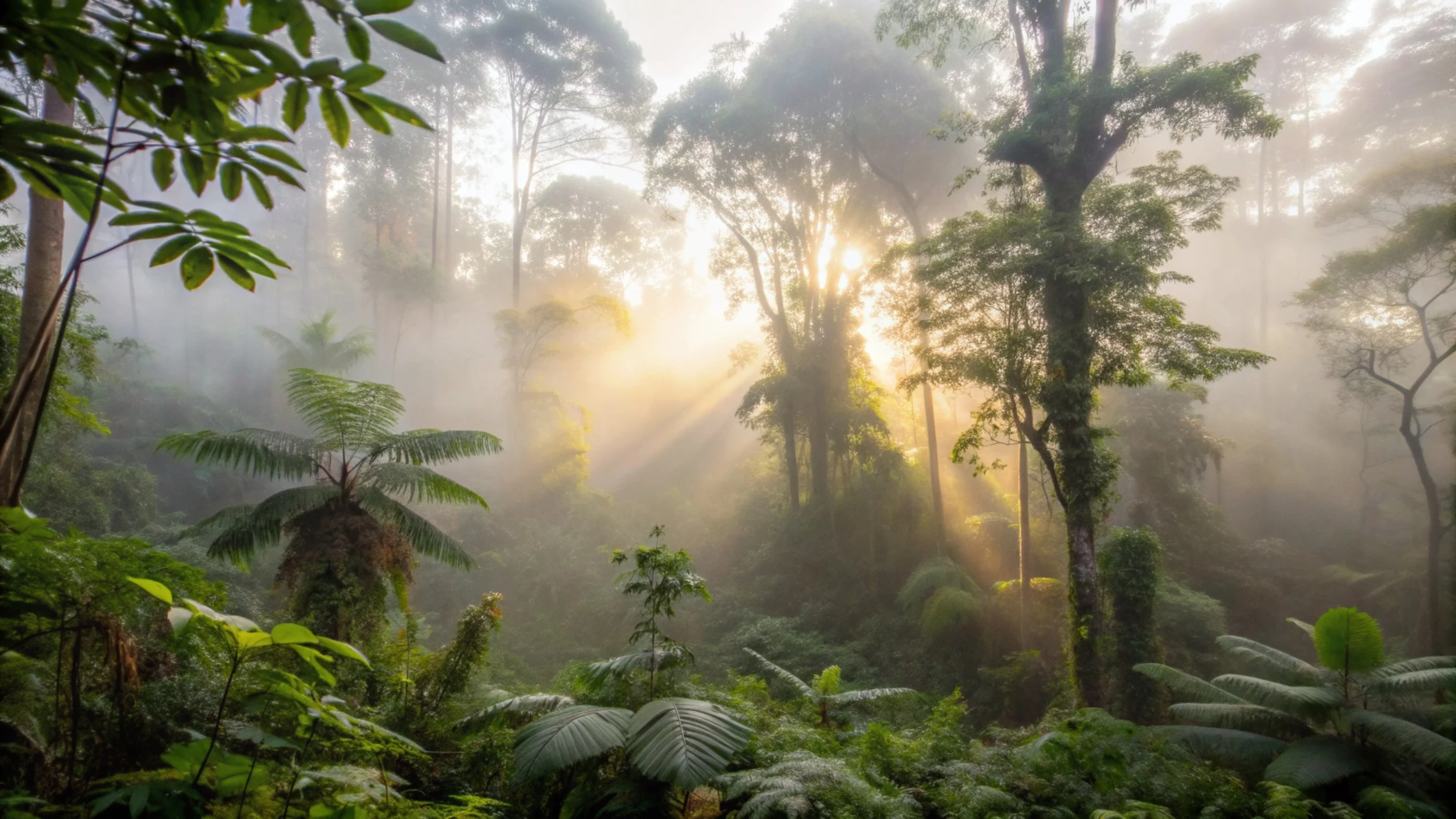
Before dawn in Sabah's Danum Valley, the rainforest begins to sing. Gibbons call across the canopy, hornbills beat heavily overhead, and a walkway suspended more than twenty metres above the forest floor carries the first guests of the day between ancient trees in one of the oldest stretches of jungle on Earth. This is primary rainforest — roughly 130 million years old, home to orangutans, clouded leopards, and hundreds of bird species — and it is exactly the kind of experience your clients now save screenshots of and ask you to recreate.
It is also a two-hour drive deep into a conservation area from the nearest town, accessed by a single road, served by a lodge that takes only a handful of guests at a time. The dream is effortless to sell. The delivery is anything but. For a travel agency trying to grow, that contradiction is the whole problem.
The product that sells itself — and breaks your operations
Wildlife and nature travel has a rare commercial quality: the marketing does itself. A short clip of mist rising off the canopy, the sound of gibbons, an orangutan moving through the trees — clients are sold before you finish the sentence. Demand for immersive, remote, nature-first experiences across Southeast Asia has surged, and these trips command premium prices and fierce client loyalty.
But the same qualities that make these experiences extraordinary make them operationally brutal. The destinations are remote by definition. The lodges are small by design, with strict capacity. The logistics are unforgiving in ways a city break never is. And every one of those friction points lands on the agency that sold the trip.
This is the trap of high-value nature travel: the easier it is to sell, the harder it is to run. And an agency that cannot run it reliably cannot grow on it.
Why rainforest logistics defeat ordinary operations

Consider what actually sits behind a single booking in a place like Danum Valley, and the pattern repeats across Borneo, Sumatra, and the wider region.
Access is the first wall. Reaching primary rainforest usually means a regional flight, then a long transfer over rough roads, timed precisely to the client's arrival rather than a fixed shuttle. Get the timing wrong and a client is stranded for hours at a remote junction with no easy fix.
Capacity is the second. The best rainforest lodges are deliberately tiny — a few dozen guests at most — which means allocation, advance booking, and supplier relationships matter enormously. Walk-up availability does not exist.
Then come the specifics that define the experience itself: expert naturalist guides who can actually find wildlife, permits and conservation rules that govern where and when guests may go, seasonality that shifts what is possible month to month, and patchy connectivity that makes remote troubleshooting from another country nearly impossible. When a client wants to extend, change a guide, or react to weather, someone has to be physically present and locally connected to make it happen.
For an agency handling this from a desk overseas, every one of these is a potential failure point — and failures in remote destinations are expensive, both in refunds and in reputation.
"We operate the ground while you grow your brand"
This is precisely the division of labour a destination management company exists to provide. A DMC is the on-the-ground operational layer: the local teams, the vetted transport, the guide network, the permit knowledge, the supplier allocations, and the round-the-clock presence inside the destination.
Hyperport DMC frames the relationship plainly — operate the ground while you grow your brand. The agency keeps the client relationship, the brand, and the creative work of designing the journey. The DMC absorbs the entire operational burden of making remote Southeast Asian experiences run smoothly, region by region, lodge by lodge, transfer by transfer.
Crucially, the ground team works behind your brand, not in front of it. The client experiences seamless logistics deep in the jungle and credits the agency that sent them there. Your name is on the trip; the operational machinery stays invisible.
The real reason this matters: you cannot scale on personal effort
Here is the part that decides whether an agency stays small or grows. Operational work does not scale. Every remote trip you personally coordinate consumes hours of your time — chasing transfers, confirming guides, managing the thousand small details of a destination you are not standing in. Sell more of them and you do not grow a business; you build yourself a second full-time job that caps out the moment you run out of hours.
This is why so many agencies quietly avoid their most profitable products. The remote rainforest trip earns more and builds deeper loyalty than the easy package — but it costs so much operational effort that taking on more of them feels impossible. So the agency stays where it is, selling the safe and the simple, leaving the best business on the table.
Outsourcing the ground operation breaks that ceiling. When the logistics are handled by a partner whose entire business is execution across Southeast Asia, each additional booking no longer adds proportional stress to your week. You can take on ten complex nature itineraries with the same effort that one used to demand. That is what scaling actually looks like: growing revenue without growing your operational load in lockstep.
One region, one partner, room to grow
Southeast Asia is vast and fragmented for nature travel — Bornean rainforest, Sumatran jungle, and countless reserves in between, each with its own access routes, suppliers, permits, and rhythms. Building reliable ground capability in each, one relationship at a time, is the work of years and not realistic for most agencies to do alone.
A networked DMC functions as a ready-made regional operations arm. Rather than sourcing and vetting a new local operator for every reserve, the agency works through a single partner that already holds the relationships and the local expertise across the region. That is the foundation that lets an agency expand its offering confidently instead of one painstaking destination at a time.
The takeaway for agencies
The calls of the canopy will keep selling themselves. Clients will keep asking for the remote, the wild, and the unforgettable, and those trips will remain among the most valuable an agency can offer. The question is never whether the demand exists. It is whether you can deliver at scale without burying yourself in operations.
Hand the ground to a partner built for it, and the answer changes. Sell the dream, grow the brand, and let the operational engine run the jungle for you.
Ready to scale your nature and wildlife offering across Southeast Asia without the operational stress? Become a Hyperport DMC partner today.
